C. Franck is one of the rare composers of organ music who can be spoken of in the same breath withJohann Sebastian Bach. In 1890 Franck composed the "Trois Chorals", his homage to Bach. The third "Choral", in a minor, is a three movement work and opens with a Prelude. The central section, an adagio in A Major, is a contrasting cantilena. The mood of the opening section returns in the concluding section, which contains elements of all that came before and ends in A Major.
Harpsichord music of the French composers at the end of the 17th century is part of the most original sides of European culture. In F. Couperin's, J.Ph. Rameau's and L.C. Daquin's "Miniatures" life in this gallant century is presented pretty vividly. There you find an exhibition of human portraits, descriptions of landscapes as well as scenes from every day life. The interpretation of these uvres on the bajan gives them a very special attraction.
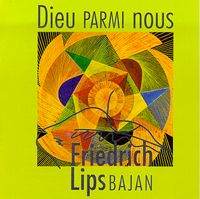
O. Messiaen ranks with the most important French composers of the 20th century. His oeuvres for organ take a special place in his work. Deeply religious, he meditates in his works about life and death, God and eternity. Today the nine Christmas meditations "La Nativité du Seigneur" ("The birth of Christ") are included in the repertoire of leading organists all over the world, while certain sections of it are being increasingly used as an integral part of the church service. Their theological horizon is enviably broad and sustained. Meditation Nr 9 "Dieu parmi nous" ("God among us") is the solemn apogee of the cycle.
Stimulated by Friedrich Lips - K. Wolkow wrote a second sonata in 1980, thus honouring the 600-year-jubilee of the battle of Kulikow, in which relevant motives depict the fight between Russians and Tatars. As it is usual for Wolkow, he uses old Russian songs in his two movement œuvre. At the beginning orthodox hymns are dominating, the second part shows Tatar songs until - at the end - there is peace and quiet. After this battle that was extremely important for Russia's history, the country could finally be united.
Russian composers like M. Glinka, N. Rimskij-Korsakow or P.I. Tschaikowskij have always been attracted by Spanish music. In his "Ispaniada" Wl. Solotarjow presents, in tuneful melodies and rhythmic effects, various images of Spain in a way a Russian imagines this country. |